
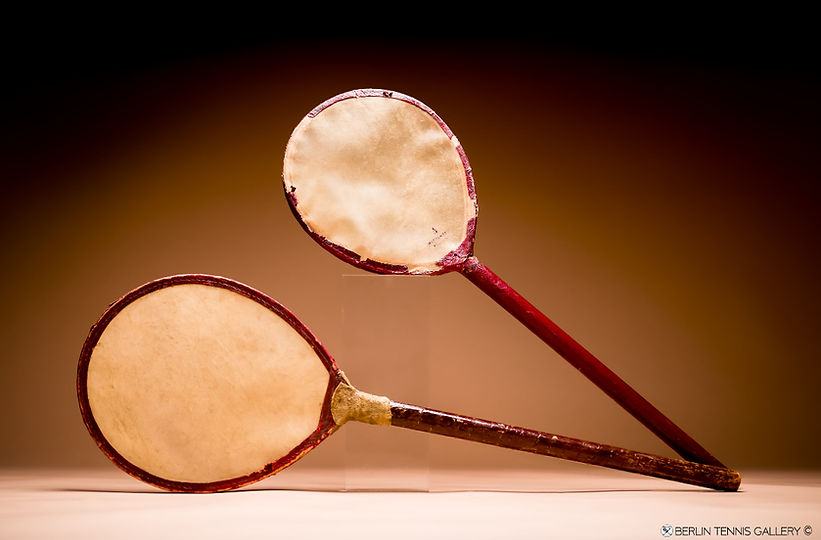
The Vellum-Covered Battledore
A Glimpse into Victorian Leisure – Origins of Badminton
Manuf.: Garden tennis racquet maker
Model: Vellum-covered battledores
Spec.: Vellum-covered, male and female/child bat
Year: 1861
(documented or estimated)
Background facts:
Battledore and shuttlecock, or jeu de volant, is a sport related to the professional sport of badminton. The game is played by two or more people using small racquets (battledores), made of rows of gut stretched across the frame, and shuttlecocks, made of a base of some light material, such as cork, with trimmed feathers fixed around the top. The object is for players to bat the shuttlecock from one to the other as many times as possible without allowing it to fall to the ground.
The modern game is closely related to the professional sport of badminton.
Fames with a shuttlecock are attested to as early as 2,000 years ago, and have been popular in India, China, Japan, and Siam. Various traditional shuttlecock games have been played by North American indigenous peoples, including the Kwakiutl, Pima, Salish, and Zuni; they are often played with a feathered shuttle made of corn husk or twigs and sometimes a wooden battledore. In Europe, battledore and shuttlecock was played by children for centuries (the OED dates the words to 1598 and 1599 respectively) and ancient drawings appearing to depict the game have been found in Greece. It was still being played in the College Garden, Glasgow, Scotland in August 1850, and Japan in 1890 and 1910.
Practicing Garden Tennis, 1887
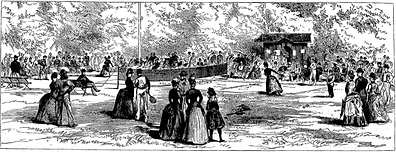
Illustrations
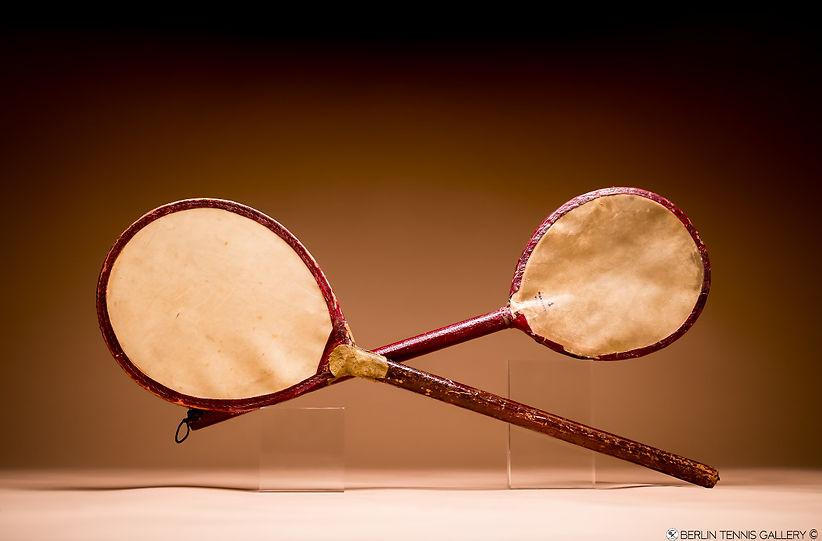
Portrait
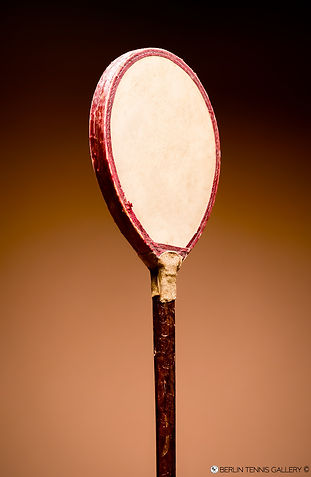
3D Left Position

3D Right Position
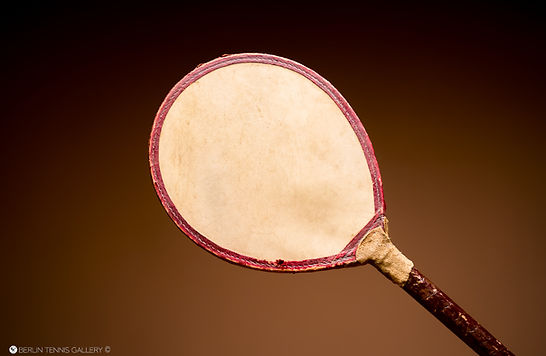
Face
Landscape