
Evolution of Tennis and the Racquet
Chapter II
From Royal to Lawn Tennis
1500-1874
The tennis racquet evolved rapidly, gradually adopting more modern forms. The Royal tennis racquet from 1583 illustrates how racquets were used and played with in Royal courts at the end of the 16th century. Remarkably, the frame had a relatively modern shape and was strung in the traditional manner.


Medieval nobleman holding a racquet
Antonio Sciano's indirect yet lasting influence, combined with the cultural prestige of jeu de paume, likely contributed to the growing interest in the game. In 1767, the esteemed veterinary doctor François-Alexandre-Pierre de Garsault, an early authority on the sport, published a beautifully illustrated volume titled Art du paumier-raquetier et de la paume as part of the prestigious Descriptions des arts et métiers series. In this work, Garsault provided a detailed account of how racquet makers, known as paumier-raquetiers, crafted frames during this period.


Racquet specification by F.A.P. de Garsault
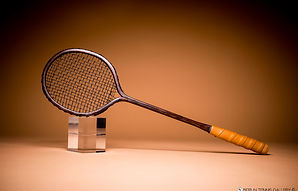
As the game continued to evolve, so did the racquet. The sport was originally played indoors, similar to modern squash. To accommodate the need to hit balls out of corners, real tennis racquets featured a slightly unwound, lopsided shape, as seen in Garsault's publication. The second paumier-racquet from the Berlin Tennis Gallery demonstrates how racquets were constructed at the end of the 18th century. This design became the standard for the game of real tennis and was used by manufacturers such as Grays of Cambridge until the end of the 20th century.

Early Real Tennis Racquet
Where tennis began to take shape
1789

English real tennis manufacturer, illustration by Garsault
What was once an elite pastime soon began to influence the game of tennis. Wingfield later adopted the net height from games like Battledore and Shuttlecock, an earlier form of badminton, into his game Lawn Tennis, the basis for today's tennis. Battledore and Shuttlecock racquets are among the oldest sports racquets in existence.

The Indo-German Legacy Racquet
1648
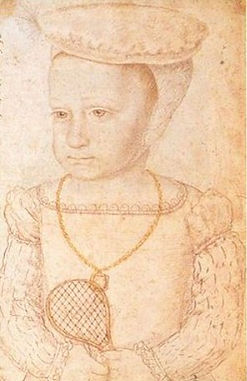
Charles IX (later King of France), holding a racquet at age 2 in 1552
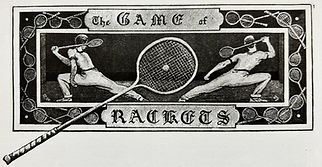
During the 19th century, battledores were often covered with leather, giving them both durability and a unique texture. Meanwhile, garden tennis sticks, still strung with gut, continued to be popular and were commonly used for casual play.

Battledores with strings
1849
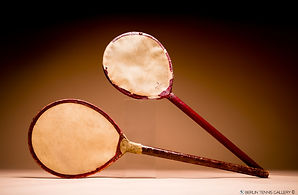
Adult and Child Battledore with leather covering 1861

Parlour tennis bat, two early table tennis paddles
1875
The growing popularity of the sport did not escape the attention of Walter Clopton Wingfield, a Major in the British Army who served under the British Crown from 1870 to 1902. Wingfield devised his own version of tennis and compiled a set of rules for a game he called Sphairistiké, a Greek term for ball games, which later evolved into lawn tennis, or simply tennis. On 23 February 1874, Wingfield's concept was granted British Patent No. 685, marking a transition from the more than 300-year-old era of real tennis to modern tennis. Note: We deliberately refer to this as a transition rather than the End of the real tennis era, as the sport is still played today, particularly in Great Britain.
All objects discussed in this chapter are part of the complete Evolution collection.
In Chapter III: From Solid to Laminated Wood, we will explore how the sport marked the beginning of the modern tennis era.